
University of Memphis Athletics
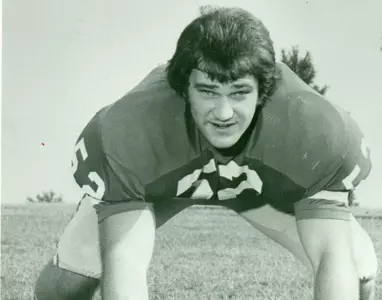
Photo by: UofM Athletic Media Relations
Where Are They Now: Bob Rush
Nov 19, 2020 | Football
Former Tiger center reminisces about his time in the NFL, behind the mic as a member of the UofM radio broadcast crew.
Former University of Memphis football coach Charlie Bailey, like all those who lead programs, knew how to get the most out of his players, his assistants and, well, anyone else that might be in his midst.
When ex-NFL offensive lineman Bob Rush became the Tigers' radio analyst in the late 1980s, Bailey took advantage of the gift. Rush had spent nine seasons in the league with the San Diego Chargers and the Kansas City Chiefs and provided a sounding board for Bailey, who respected Rush's understanding of the game.
"I seriously considered joining his staff at one point," Rush said.
A first-round pick of the Chargers after a successful three seasons on the Memphis offensive line in the mid-1970s, Rush resisted the urge to return to the field and remained in the radio booth for 21 years. He stepped aside after the 2009 season, the last of nine for Tommy West, who, like Bailey, Rush admired.
One of only seven NFL first-round draft picks from the UofM in the past 45 years, Rush enjoyed a lengthy career in medical sales after his pro career. He expects to retire soon from a post-medical sales job at a local firearms shop.
Health issues forced him out of the radio booth and out of medical sales. He said he endured nine football-related surgeries, the last being neck surgery five years ago. He jokes that he's spent a lot of time in doctor's offices during his lifetime, either as a patient or a salesman.
"I stayed in medical sales until about 10 years ago," Rush said. "Our company had a massive cutback, and then I started having some health and mobility issues so I went into what I call semi-retirement. I work at a gun shop. Guns have been a hobby of mine since I was a child."
Rush, 65, said he'll retire fully by the end of the year, but expects to make frequent returns to gun shop.
"I used to haunt the place all the time," he said. "I don't think I'll stop going."
As a player in the 1970s under Fred Pancoast and Richard Williamson, Rush made himself attractive to NFL teams because of his size. He was a 6-foot-5, 265-pound center, a rarity for that position in the 1970s.
Being a first-round pick was an honor, too.
"I'm thinking Harry Schuh was the first (in 1965) and there was no one between him and I," Rush said. "Truth be known, if (Tigers defensive back) Eric Harris hadn't signed with the Canadian Football League before the draft, he would have easily been a first-round (NFL) draft pick, too."
With the Tigers, Rush was part of a program that won 29 games in four seasons – one of the best four-year runs in that era – but never participated in a postseason game. Bowls were not as abundant in number during the 1970s.
Rush, who was recruited as a defensive end, moved to the offensive line late during his freshman season. He was converted to reserve left tackle, a position he had played in high school. As a sophomore, he was moved to center, where there were no returnees on the roster.
His biggest challenge, initially, was snapping with his right hand. He is lefthanded.
Rush said the move paved his way to becoming a first-round pick.
"The 3-4 defense was coming into its own in the pros and most of your professional centers back then were 235-240 pounds," Rush said. "Then here comes a tackle-sized, natural center and teams saw that as a real opportunity."
Rush said there were two other tall NFL centers that played before he was drafted – Forrest Blue with San Francisco and Bob Johnson with Cincinnati – but those were the only other 6-foot-5 players who had excelled at the position.
After his pro career ended, Rush stayed involved in the sport as a radio analyst for the Tigers football broadcasts. He enjoyed spending time with the head coaches, particularly West, who led a resurgence in the 2000s with running back DeAngelo Williams, and Bailey. Bailey quickly took Rush under his wing as an extra assistant.
"I was fresh out of pro football, and I'd go in like we'd normally do before a game and get a briefing on the game plan. Charlie Bailey would pull me aside and he'd draw up an (offensive) play and say, 'Hey, how did you guys block for this (in the NFL)?'
"I'd tell him exactly what we did and how we did it and what we looked for. I'd have joined his staff, but he left before I could. He was a fun guy. And his staff was fun. We had a great time."
When ex-NFL offensive lineman Bob Rush became the Tigers' radio analyst in the late 1980s, Bailey took advantage of the gift. Rush had spent nine seasons in the league with the San Diego Chargers and the Kansas City Chiefs and provided a sounding board for Bailey, who respected Rush's understanding of the game.
"I seriously considered joining his staff at one point," Rush said.
A first-round pick of the Chargers after a successful three seasons on the Memphis offensive line in the mid-1970s, Rush resisted the urge to return to the field and remained in the radio booth for 21 years. He stepped aside after the 2009 season, the last of nine for Tommy West, who, like Bailey, Rush admired.
One of only seven NFL first-round draft picks from the UofM in the past 45 years, Rush enjoyed a lengthy career in medical sales after his pro career. He expects to retire soon from a post-medical sales job at a local firearms shop.
Health issues forced him out of the radio booth and out of medical sales. He said he endured nine football-related surgeries, the last being neck surgery five years ago. He jokes that he's spent a lot of time in doctor's offices during his lifetime, either as a patient or a salesman.
"I stayed in medical sales until about 10 years ago," Rush said. "Our company had a massive cutback, and then I started having some health and mobility issues so I went into what I call semi-retirement. I work at a gun shop. Guns have been a hobby of mine since I was a child."
Rush, 65, said he'll retire fully by the end of the year, but expects to make frequent returns to gun shop.
"I used to haunt the place all the time," he said. "I don't think I'll stop going."
As a player in the 1970s under Fred Pancoast and Richard Williamson, Rush made himself attractive to NFL teams because of his size. He was a 6-foot-5, 265-pound center, a rarity for that position in the 1970s.
Being a first-round pick was an honor, too.
"I'm thinking Harry Schuh was the first (in 1965) and there was no one between him and I," Rush said. "Truth be known, if (Tigers defensive back) Eric Harris hadn't signed with the Canadian Football League before the draft, he would have easily been a first-round (NFL) draft pick, too."
With the Tigers, Rush was part of a program that won 29 games in four seasons – one of the best four-year runs in that era – but never participated in a postseason game. Bowls were not as abundant in number during the 1970s.
Rush, who was recruited as a defensive end, moved to the offensive line late during his freshman season. He was converted to reserve left tackle, a position he had played in high school. As a sophomore, he was moved to center, where there were no returnees on the roster.
His biggest challenge, initially, was snapping with his right hand. He is lefthanded.
Rush said the move paved his way to becoming a first-round pick.
"The 3-4 defense was coming into its own in the pros and most of your professional centers back then were 235-240 pounds," Rush said. "Then here comes a tackle-sized, natural center and teams saw that as a real opportunity."
Rush said there were two other tall NFL centers that played before he was drafted – Forrest Blue with San Francisco and Bob Johnson with Cincinnati – but those were the only other 6-foot-5 players who had excelled at the position.
After his pro career ended, Rush stayed involved in the sport as a radio analyst for the Tigers football broadcasts. He enjoyed spending time with the head coaches, particularly West, who led a resurgence in the 2000s with running back DeAngelo Williams, and Bailey. Bailey quickly took Rush under his wing as an extra assistant.
"I was fresh out of pro football, and I'd go in like we'd normally do before a game and get a briefing on the game plan. Charlie Bailey would pull me aside and he'd draw up an (offensive) play and say, 'Hey, how did you guys block for this (in the NFL)?'
"I'd tell him exactly what we did and how we did it and what we looked for. I'd have joined his staff, but he left before I could. He was a fun guy. And his staff was fun. We had a great time."


Wednesday, June 17
Saturday, April 18
Saturday, April 18
Saturday, April 18